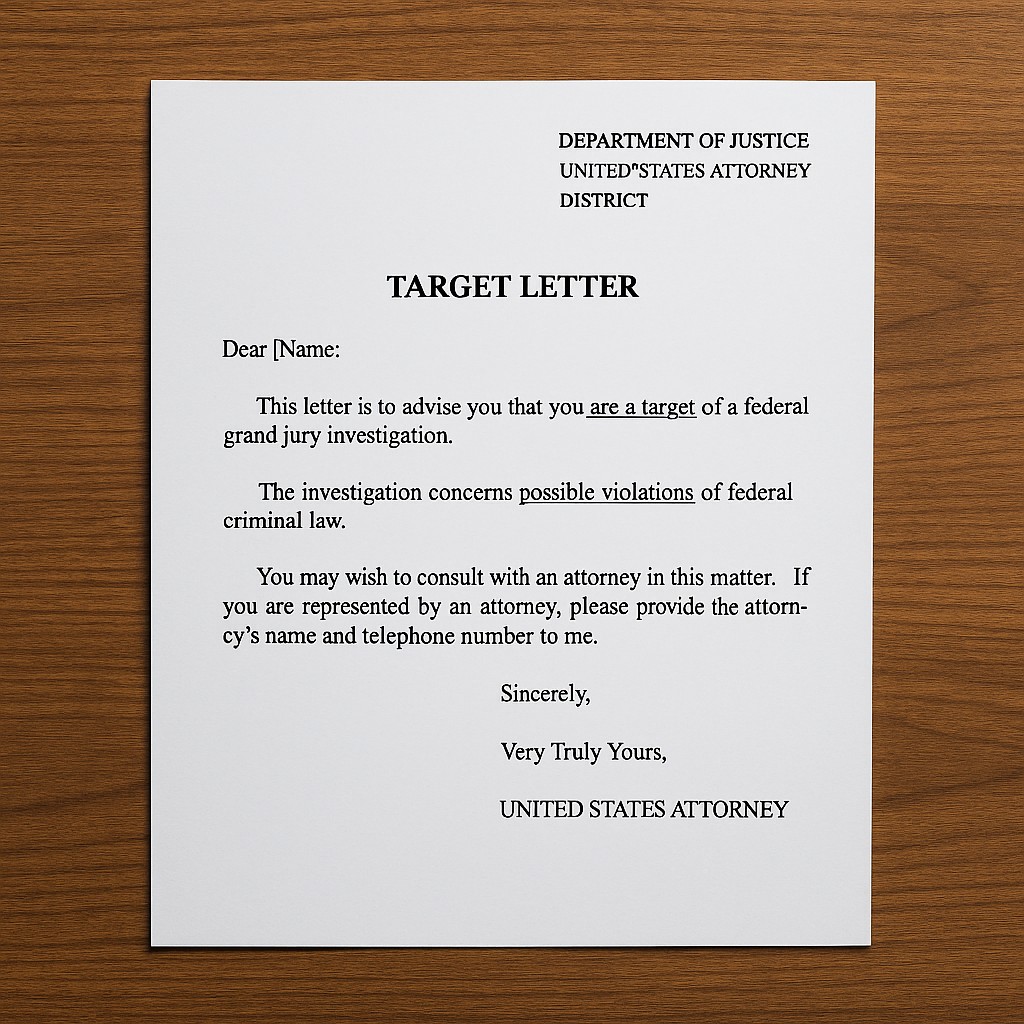






By Robert Almonte, Former Federal Prosecutor and San Antonio Federal Criminal Defense Attorney If you received a federal target letter, you should assume federal prosecutors believe they have substantial evidence linking you to a crime. A target letter does not guarantee an indictment, but it is one of the strongest indicators that federal authorities are…
Continue reading ›Articles Posted in The Legal Pad
If your business receives a federal grand jury subpoena, do not treat it like a routine records request. In the first 48 hours, the priorities are to preserve documents, stop routine deletion, limit internal discussion, identify one point person, and get experienced federal defense counsel involved. A federal grand jury subpoena is a serious legal…
Continue reading ›If you or someone you love has been arrested on federal charges, one of the first urgent questions is whether release is possible. In federal court, that question is often decided at a detention hearing. Under the Bail Reform Act, the law generally favors release first, with detention only if no condition or combination of…
Continue reading ›Robert Almonte of Almonte Law has been recognized among San Antonio’s Best Lawyers for 2026 in criminal defense—white collar, a distinction awarded through peer nominations and featured by Scene in SA. For clients facing serious federal investigations, this recognition reinforces what matters most: proven defense, strategic execution, and results when everything is on the line.…
Continue reading ›If federal agents contact you, ask to speak with you, serve you with a subpoena, or your employer tells you investigators are asking questions, one of the first things you need to understand is this: Are you a witness, a subject, or a target? Those terms matter. They can affect how much risk you face,…
Continue reading ›When a federal prosecutor asks whether your lawyer is interested in a proffer, do not treat it like an informal conversation. It is a strategic event in a federal case. A proffer usually happens in the context of plea or cooperation discussions, and federal law gives some protection to certain plea-discussion statements. Federal Rule of…
Continue reading ›When federal agents search your home or business, the worst thing you can do is panic and start talking. The first 24 hours matter. What you say, what you hand over, and what you do next can affect the direction of the investigation. If federal agents executed a search warrant at your home, office, clinic,…
Continue reading ›Receiving a federal grand jury subpoena can be alarming. For many people, it is the first sign that they may be connected to a federal investigation. In some cases, the subpoena is directed to a witness. In others, it may be a sign that the government is investigating you, your business, or someone close to…
Continue reading ›Federal Gun Defense in the Western & Southern Districts of Texas Federal firearms charges are among the most serious criminal allegations a person can face—especially when prosecuted in Texas federal courts, including the Western District of Texas and the Southern District of Texas. Unlike state gun offenses, federal firearms charges often carry mandatory minimum sentences,…
Continue reading ›An investigation by the Army Criminal Investigation Division (CID) can extend far beyond the military justice system. In many cases, CID investigations are conducted in coordination with federal law enforcement and the U.S. Department of Justice (DOJ), exposing individuals to federal criminal charges in U.S. District Court. If you are facing a CID investigation with…
Continue reading ›