





I Received a Federal Target Letter. Am I Going to Be Indicted?


By Robert Almonte, Former Federal Prosecutor and San Antonio Federal Criminal Defense Attorney
If you received a federal target letter, you should assume federal prosecutors believe they have substantial evidence linking you to a crime. A target letter does not guarantee an indictment, but it is one of the strongest indicators that federal authorities are seriously considering criminal charges. Before speaking with investigators, producing documents, or making decisions about cooperation, you should consult experienced federal defense counsel.
What Is a Federal Target Letter?
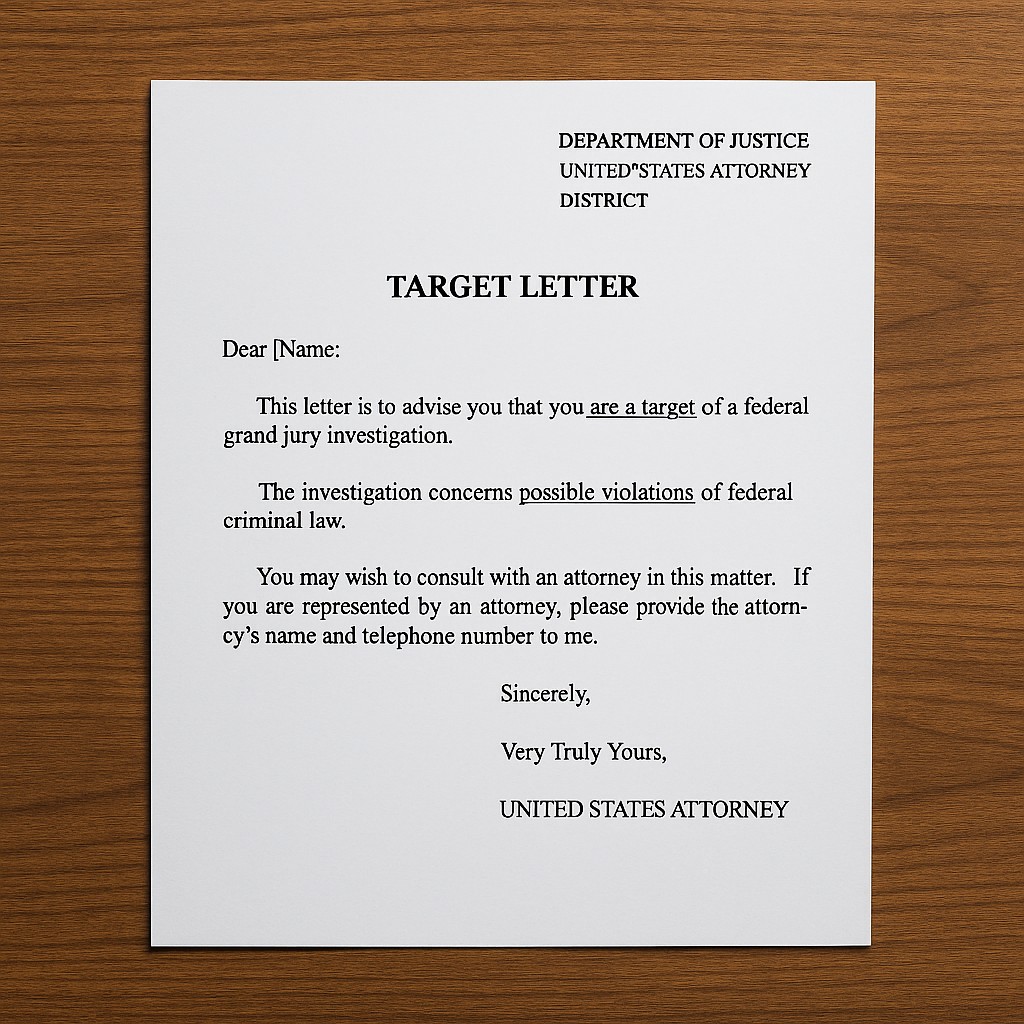
A federal target letter is a formal notice from the United States Department of Justice informing an individual that they are the target of a federal criminal investigation.
According to the Department of Justice, a “target” is a person against whom prosecutors or investigators have substantial evidence connecting them to the commission of a crime.
Receiving a target letter generally means:
- Federal prosecutors are actively investigating you.
- An indictment may be under consideration.
- A grand jury investigation is likely underway.
- Prosecutors may be willing to discuss cooperation or resolution before charges are filed.
Does a Target Letter Mean I Will Be Indicted?
Not necessarily.
However, a target letter should be treated as an extremely serious development.
In many federal cases, prosecutors send target letters shortly before seeking an indictment. The purpose is often to:
- Give the target an opportunity to retain counsel.
- Request voluntary cooperation.
- Invite testimony before a grand jury.
- Discuss a potential resolution.
Whether an indictment ultimately occurs depends on numerous factors, including the strength of the evidence, available defenses, witness credibility, and whether prosecutors believe additional investigation is necessary.
What Should I Do Immediately After Receiving a Target Letter?
1. Do Not Contact Investigators Yourself
Many people believe they can “clear things up” by calling the agent listed in the letter.
This is often a costly mistake.
Federal investigators are trained interviewers. Any statement you make may later be used against you.
2. Preserve Documents and Electronic Records
Do not delete:
- Emails
- Text messages
- Financial records
- Cloud files
- Social media communications
Destruction of evidence can create additional criminal exposure.
3. Retain Federal Defense Counsel Immediately
The period between receiving a target letter and a potential indictment may provide opportunities to:
- Present exculpatory evidence
- Challenge investigative assumptions
- Negotiate with prosecutors
- Explore cooperation options
- Avoid charges altogether
Early intervention can significantly affect the outcome of a federal investigation.
Why Would Federal Prosecutors Send a Target Letter?
Federal prosecutors may send a target letter for several reasons.
To Encourage Cooperation
In white-collar, healthcare fraud, public corruption, and financial crime investigations, prosecutors often seek information from individuals before charges are filed.
To Provide Notice
The government may believe fairness requires informing a person they are under investigation before significant proceedings occur.
To Invite Grand Jury Testimony
Some target letters advise recipients of their right to testify before the grand jury. In most situations, this decision should only be made after consulting experienced counsel.
What Crimes Commonly Lead to Federal Target Letters?
Target letters frequently arise in investigations involving:
- Healthcare fraud
- Wire fraud
- Bank fraud
- Securities fraud
- Public corruption
- Drug trafficking conspiracies
- Federal firearms offenses
- Tax crimes
- Money laundering
- False statements to federal agents
The specific allegations often become clearer after counsel communicates directly with prosecutors.
Can a Lawyer Stop a Federal Indictment?
No lawyer can guarantee that charges will not be filed.
However, experienced federal defense counsel may be able to:
- Identify weaknesses in the government’s evidence
- Correct factual misunderstandings
- Present mitigating information
- Negotiate alternatives to prosecution
- Position a client for the best possible outcome
The earlier counsel becomes involved, the more options may be available.
Why Former Prosecutor Experience Matters
Federal investigations are often driven by strategy developed inside the U.S. Attorney’s Office.
A former federal prosecutor understands:
- How charging decisions are made
- What evidence prosecutors prioritize
- How cooperation discussions work
- How grand jury investigations develop
- When intervention is most effective
That perspective can be invaluable during the earliest stages of a federal investigation.
Frequently Asked Questions
How much time do I have to respond to a target letter?
The deadline varies. Some letters request immediate contact, while others provide a specific response period. You should contact counsel as soon as possible.
Can I ignore a target letter?
Ignoring a target letter does not make the investigation disappear. Prosecutors may continue pursuing charges regardless of whether you respond.
Should I testify before the grand jury?
In most situations, this decision should only be made after careful consultation with experienced federal defense counsel.
Is a target letter public?
Generally, no. Federal investigations are often confidential unless charges are filed or court proceedings become public.
Contact a Former Federal Prosecutor About Your Target Letter
If you have received a federal target letter, the decisions you make in the coming days may significantly affect the course of your case.
Robert Almonte is a former federal prosecutor who represents individuals and businesses facing federal investigations throughout Texas and the United States.
Contact our office immediately to discuss your situation before speaking with federal agents or prosecutors.


Get in Touch
Free Consultation 210-866-3233